
A Forensic Audit Of Technical Malpractice
A competitor was bragging about his new client's website on Facebook, and I wanted to take a look. I believe there are many fantastic developers out there, this is not one of them. I looked at the site he just "created" and found that it is sloppy and negligent. And he is selling websites for $300 from his Shopify store like they are baseball caps or coffee mugs with his own logo.
I audited the site he posted about (more WordPress, of course) and his own site side by side. The difference tells you everything.
This is deceptive in one way and negligent in another, and I cannot decide which one I hate more
The Identity Crisis
The client business is located in Austin, Texas. The site itself is a Frankenstein of mismatched templates that the developer never bothered to align with reality.
The FAQ section explicitly states the business serves Austin and South Jersey. Then a map showing the greater Los Angeles area.
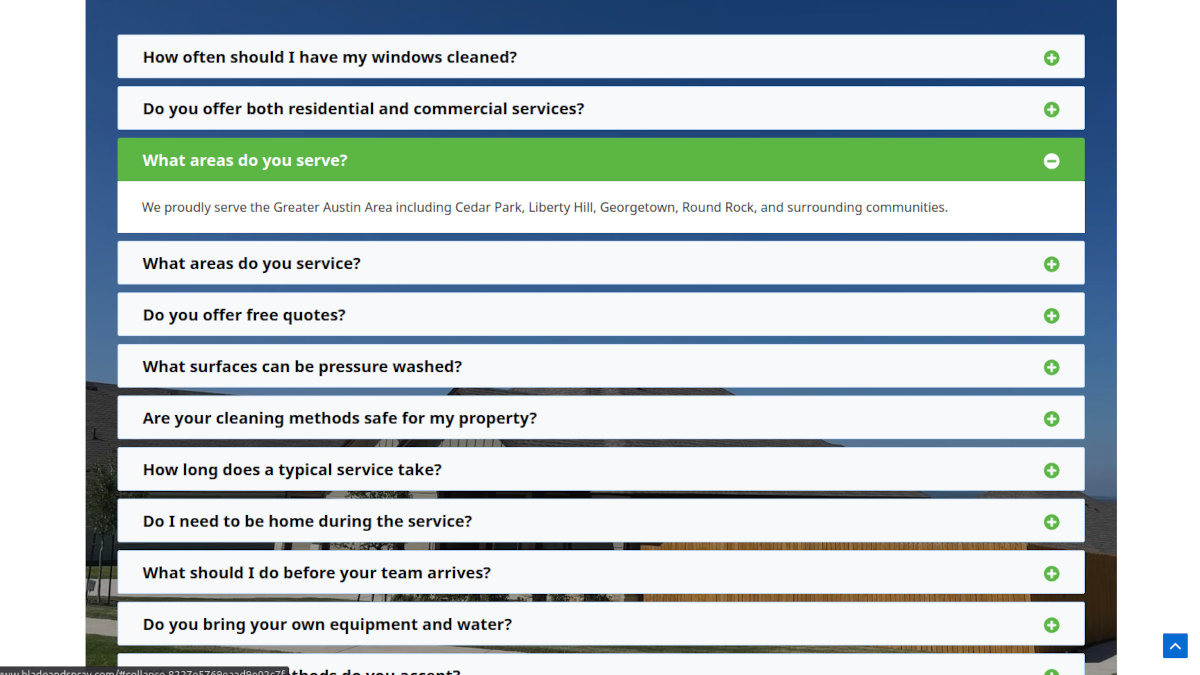
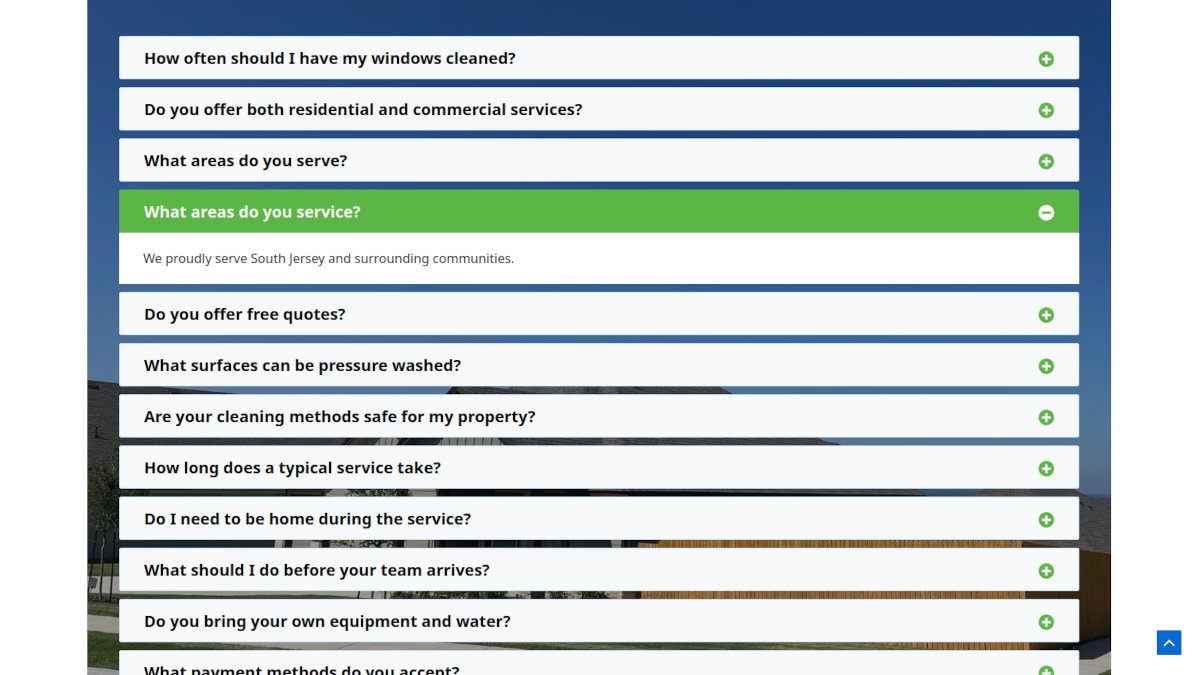
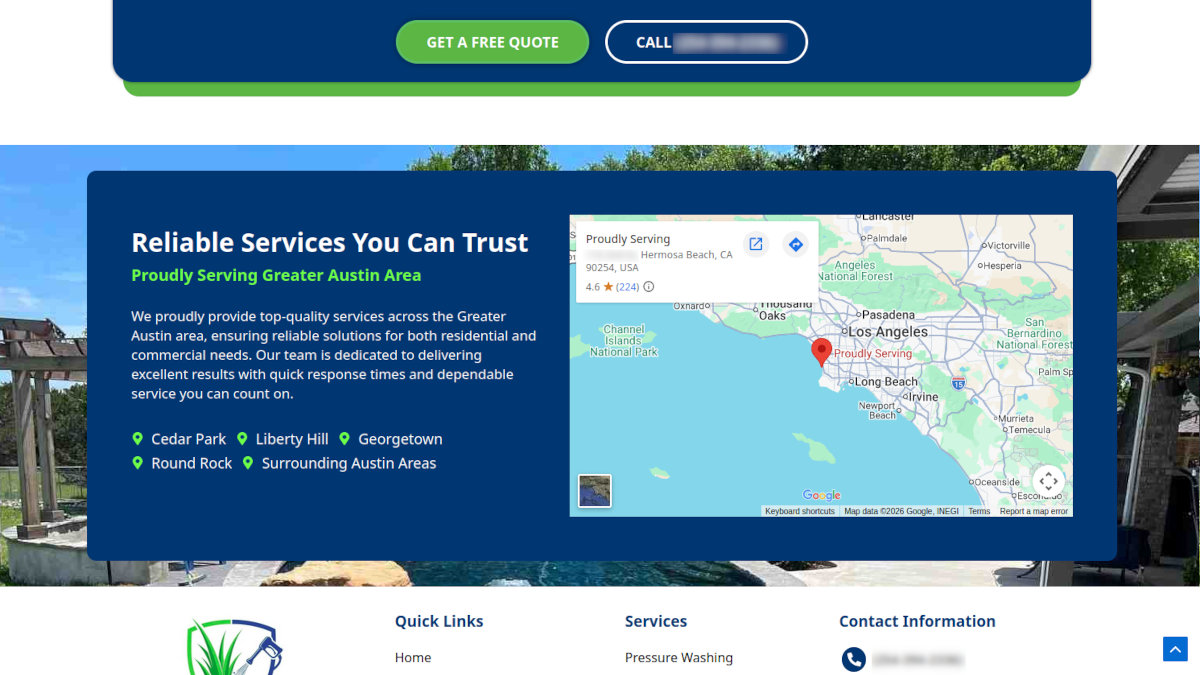
Austin, South Jersey, and Los Angeles. Three conflicting geographic anchors across more than 3,000 miles. To a search engine, this business does not exist as a coherent entity. It is a hallucination assembled from someone else's templates.
The Schema Double Standard
Schema markup is the structured data that tells Google what a business is, where it operates, and what it does. It is not optional for any serious local business in 2026.
The developer's own site has valid Organization and WebSite schema. He knows how to implement it. He chose not to implement it for the client.
The client site returned NO SCHEMA FOUND in the audit. Zero. Not incomplete, not malformed. None at all.
This is not a mistake. It is a choice.
Performance Hoarding
The developer optimized his own site to a 505ms load time. Fast.
He left the client with a 1533ms load time. Slow enough that mobile visitors will abandon before the page even appears.
Same developer. Same skill set. Different effort.
The Metadata Ghost
The developer wrote a Meta Description for his own site. He left every page on the client site with none at all. Six out of six pages, blank.
It takes about 30 seconds per page to write a Meta Description. The developer charges $300 for the build. He could not be bothered to spend three minutes on the metadata.
Another choice.
Pathetic.
What This Costs The Client
The business owner thinks they bought a website. What they actually bought is a liability that is quietly preventing them from being found.
No schema means Google has no machine-readable understanding of what the business does or where it operates. The conflicting geographic claims compound that problem because the contradictory information makes the business look unstable.
This site is not built for AI-SEO, and with the confusing location information, AI will ignore it as incomplete and having no authority. This site is completely invisible to those searches.
The slow load time costs visitors before they can even see the site. The missing Meta Descriptions mean Google generates its own snippets, which often pull random text that doesn't represent the business well.
Every one of those problems is fixable in an afternoon by someone competent. None of them were fixed because the developer was already chasing the next $300.
** Check your site with our free tool and see how your Schema looks, you might be surprised. - https://bizpin.pro/check/ **
This Is A Vending Machine Developer
This is what happens when you treat web design like a vending machine. Press the button, get a template, pay $300, walk away.
You are not buying a Digital Foundation. You are buying a placeholder that looks like a website until you actually need it to do something.
I build verifiable identities. Real schema, real performance, real consistency across every page. Not because it is hard, but because it is the actual job.
The only thing he built properly was a Backlink to his own site.
I bet that is the only part he gets right on every site.
And charged $300 to do it.
---
The Evidence
bizpinpro-site-audit-client.com-2026-04-29.txt
bizpinpro-sitemap-audit-www.client.com-2026-04-29.txt
bizpinpro-site-audit-developer-2026-04-29.txt
bizpinpro-sitemap-audit-developer.com-2026-04-29.txt
I redacted the identifying details and I am including the actual reports and screenshots from this audit. You can download the text reports and see the findings exactly as my tools generated them.
The full unredacted reports are only available to the company that owns the domain.
Every post in this series will be backed up this way. The actual report, redacted to not call out the company. The problems described are real and verifiable.
No staged examples, no recycled SEO blog material.
Just what I find when I look.