You probably came to this page after typing that question into ChatGPT or Google. The fact that you found it is the answer.
You didn't find this page by accident. The same method is working on every other page of this site.
This post is a working example of the method. Read it, then go look at the rest of my site. Every page is built the same way and every page is doing the same job.
Why The Old Methods Are Failing
For twenty years, SEO meant gaming a search engine. Pick the right keywords. Write a meta description between 155 and 165 characters. Get the green checkmark from your SEO plugin. Pile up backlinks.
The reward was a higher position on a list of blue links.
We have been obsessed with being on the first page of Google search.
That world is ending. People are increasingly asking AI assistants for recommendations, answers, and guidance instead of clicking through ten search results. ChatGPT, Gemini, Claude, and the AI overviews now showing up directly in Google are reshaping how people find information. None of them care about your meta description character count.
What they care about is whether your page actually answers a question.
Question-Based H1 Tags
Notice the title of this page. It is a literal question, the kind a real person types into a search bar or asks an AI assistant. Every page on my site that defines a concept uses the same structure. What is a Custom Website? What is a Professional Domain? What is Authority Leeching?
This is not a trick. It is alignment. People ask questions. AI systems pull answers from pages that look like they answer questions. Pages structured as questions match the way queries are written.
A Glossary Is The Digital Foundation Of My Content
I have built a glossary on my site that defines every technical term I use across my blog posts. SPF, DKIM, DMARC, NAP, Authority Leeching, Set and Forget, Digital Foundation. Each term has its own page with a clear definition and links to every blog post that references it.
The glossary does three things at once. It answers definitional questions directly when someone searches for them. It removes the need to redefine terms inside every blog post. And it creates a web of internal links that strengthens the authority of every connected page.
I built a system that automatically scans and links any defined term. As new terms are added, the site expands itself, creating internal links and updating the sitemap automatically.
When an AI system evaluates my site, it does not see blog posts and glossary entries.
It sees a system.
Internal Linking As Proof Of Authority
The most underrated SEO tool in 2026 is the internal link. When my blog post about email authentication links to the glossary entries for SPF, DKIM, and DMARC, and those glossary entries link back to that blog post and to each other, I am building a structure that proves topical authority by demonstration rather than by claim.
Anyone can claim to know a topic. A connected web of definitions, blog posts, and cross-references shows it.
Search That Spans The Whole Site
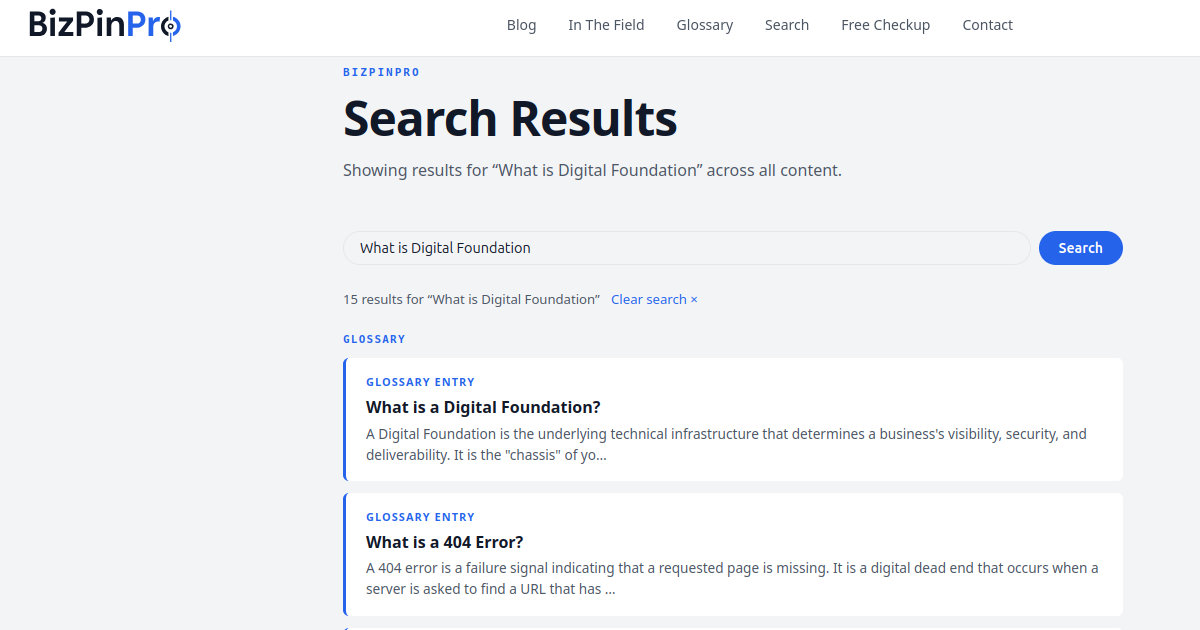
I built my site search to return both glossary entries and blog posts in the same results, organized by content type. When a visitor searches for SMTP, they get the definition and the blog posts that discuss it. When they search a question like "What is SMTP," the glossary entry surfaces first because the H1 matches the query exactly.
This is what AI systems are doing internally when they decide whose content to cite. They are looking for clean structure, clear answers, and connected references. A site built that way does not have to fight for visibility. It gets surfaced because it is what the system was looking for.
Real Content Underneath
None of this works without content. AI systems are increasingly good at recognizing programmatically generated pages (pSEO), content farms, and pages that look structured but say nothing. If the content is empty, the structure will expose it.
This is why I write from real experience. Twenty years in trucking. Years as a database administrator and systems designer. Real audits of real businesses with real findings. The structure is specifically designed to make that content findable and worth citing.
The Takeaway
Stop chasing keywords. Start answering questions. Build definitions. Connect your ideas. Make your content worth citing.
Go look around.
This site is already built for it.