When the Technology Is Real and the Digital Presence Isn't
I received a warm introduction through a LinkedIn connection to the sales lead at a veteran-owned manufacturing company. They build a patented system that monitors specialized commercial equipment, reduces energy draw, and sends alerts before a catastrophic failure happens. They have customers across all fifty states.
Real technology. Real results. Real market need.
I ran the audit before I ever responded to the introduction.
What I Found
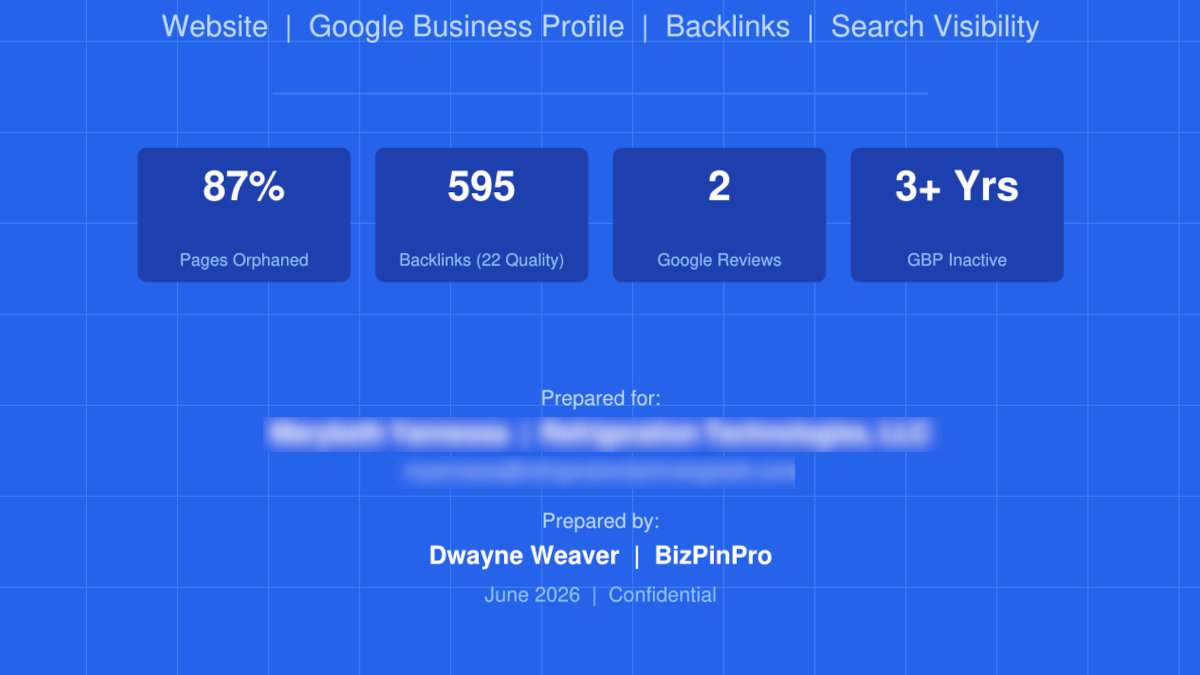
The Google Business Profile had been inactive for over three years. The most recent owner-posted content included a squirrel meme about thawing body parts and a motivational poster featuring two children. Neither has any connection to their business or potential customers. For a B2B company, that is the wrong first impression with no exceptions.
There was also an unanswered one-star review complaining that no one answers the phone. It had been sitting there for over a year with no response. Two total reviews on a company with national reach and documented case studies.
The website was worse. Built on WordPress with Elementor, partially broken after someone made changes and deleted the backup files. Two completely unrelated stock images bleeding together on mobile, splitting the H1 text across disconnected backgrounds. Five H1 tags on the homepage. Nine images with zero alt text. Lorem ipsum placeholder text still live in the page source that Google indexes directly.
The backlink profile told a story the homepage did not show. Of 595 total backlinks only 22 carry any SEO value. More significantly, the profile contained links from French pharmaceutical spam domains pointing into the uploads directory — the fingerprint of an Authority Leeching attack, where bad actors inject spam content and inbound links to steal a legitimate site's search ranking. The injected content appears to have been removed at some point. The inbound spam links remain active. The underlying vulnerability was never patched.
87 percent of the site's 367 pages are Orphaned Pages. No internal links pointing to them. Google cannot follow a path that does not exist. Years of product documentation, case studies, and technical content sitting invisible to search engines because nobody connected them to anything. This is a different form of Technical Debt that I have described before.
The Report
I put together a full audit report with screenshots, specific findings, severity ratings, and a plain language explanation of what each problem means and what fixing it looks like. The report was thorough. The findings were specific. The recommendations were organized into three phases so the path forward was clear without being overwhelming.
They never responded.
What The Silence Taught Me
I see this constantly. Companies stumbling into success because their product is genuinely that good. The technology works so well that it overcomes the colossal mistakes made along the way. An inactive GBP, a broken website, pharmaceutical spam in the backlink profile, and three years of silence have not stopped this company from operating in all fifty states.
That is not a criticism. That is a remarkable thing.
It also means the ceiling has never been properly raised. Fix the foundation and the company that is already succeeding in spite of its digital presence becomes the company that succeeds because of it.
Engineers build something remarkable. The product is real, the market need is clear, and the results are documented. And somewhere along the way the digital presence got handed to whoever was available, maintained by whoever had a spare hour, and eventually abandoned when the spare hours ran out.
A squirrel meme and a motivational poster were the last things the world saw from a company that prevents businesses from losing their entire refrigerated inventory to an equipment failure nobody saw coming.
The technology deserves better than that.
Most of the companies I audit do.
Most will stumble on anyway.