This Is Big Money
This is a highly lucrative, institutionalized SEO agency scam.
Expiring domain redirect abuse, often hidden under terms like "Private Blog Networks," "Aged Domains," or "Rebranding Acquisition", is a multi-million dollar industry.
Agencies love it because it produces fast, short-term spikes that make them look like geniuses right before they hand off the contract.
They are scamming people.
What Expired Domain Redirect Abuse Is
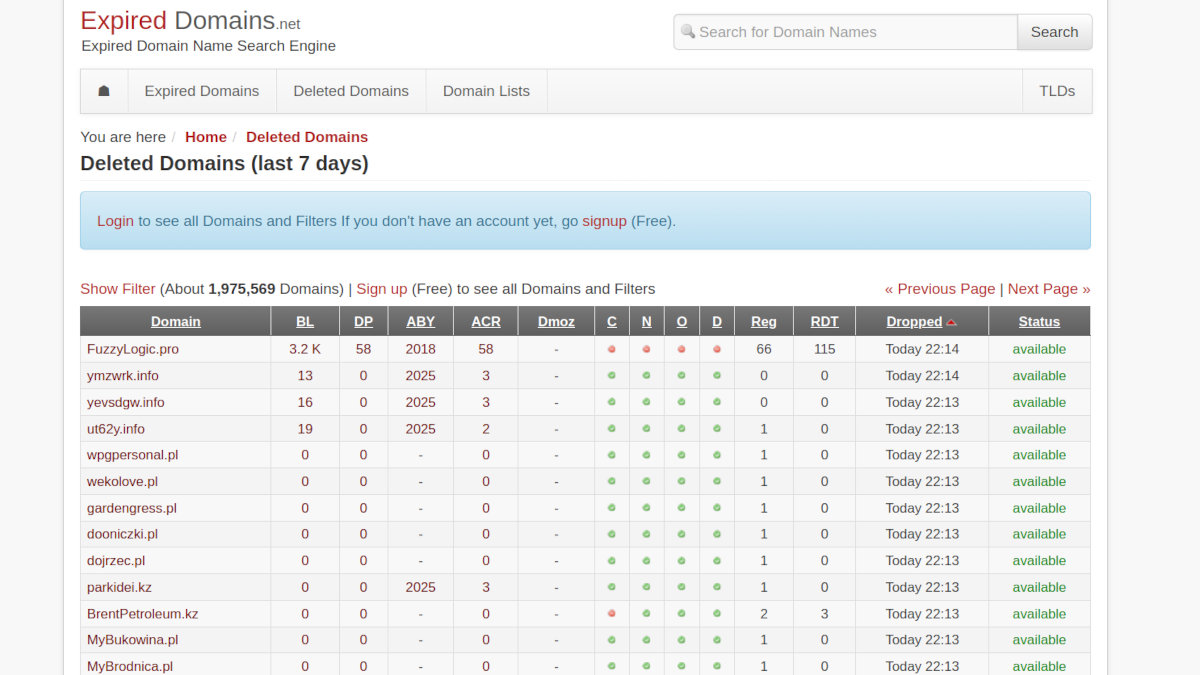
When a domain expires and the owner does not renew it, the registration becomes available for anyone to purchase. Most expired domains are worthless. They had no real traffic, no real backlinks, and no real history worth inheriting.
But some expired domains spent years building legitimate authority. A regional plumbing company that operated for fifteen years before closing. A local news site that covered a specific community before shutting down. A niche industry blog that built a real audience before the owner moved on. Those domains have real backlink profiles pointing at them from real sites. They have domain age and trust signals that took years to accumulate.
When someone buys one of those domains and immediately redirects it to their own site, they are attempting to inherit everything the original domain earned. The backlinks follow the redirect. The authority transfers. The new site gets a boost it did not earn from work it did not do.
That is the clean version of the tactic. The abusive version is what gets sold to small businesses as a premium service.
How It Gets Sold
An SEO agency pitches a client on a link building campaign. The deliverable is a set of high-authority backlinks pointing at the client's site. The agency goes out and buys expired domains with strong backlink profiles, sets up redirect chains pointing at the client's domain, and delivers a report showing impressive domain authority scores and referring domain counts.
The client sees the numbers go up. The agency collects the fee. Nobody mentions that the authority is borrowed from domains that no longer exist for their original purpose, that the redirects are manufactured rather than earned, and that Google's spam detection systems are specifically trained to identify exactly this pattern.
The numbers look real.
The authority is not.
Why Google Catches It
Google does not just count backlinks. It evaluates whether backlinks make contextual sense. A fifteen year old plumbing company domain redirecting to a national digital marketing agency is a topical mismatch that signals manipulation. A local news site from a specific county redirecting to an e-commerce store is another one.
SpamBrain looks at the relationship between the redirecting domain's history and the destination site's content. When that relationship does not make sense, the redirect equity gets discounted or removed entirely. After the March 2026 spam update, the removal is permanent. The rankings that redirect produced cannot be recovered once Google decides the signal was manufactured.
The Ticking Time Bomb Problem
The most damaging version of this for small businesses is not that the tactic stops working. It is that it works for a while and then stops working all at once.
A business that paid for an expired domain redirect campaign eighteen months ago may have seen real ranking improvements. The numbers moved. The strategy appeared to validate itself. Then Google implements a spam update and the manufactured signals get stripped . The rankings drop back to where they were before the campaign and then drop further because Google is now looking at the domain with additional skepticism.
The agency is long gone. The client is left holding the liability from a strategy they did not fully understand and were never warned about.
This is the same pattern as every other shortcut. The operator collects the fee. The client pays the long-term price.
The Difference From Legitimate Domain Acquisition
Not every domain purchase and redirect is abusive. A business that acquires a competitor and redirects the competitor's domain to their own is a legitimate business transaction. A company that rebrands and redirects an old domain to a new one is standard practice.
The distinction is intent and context. A redirect that reflects a real business relationship between the two domains is legitimate. A redirect that exists solely to transfer backlink equity from an unrelated expired domain is manipulation and a different form of Authority Laundering.
Google knows the difference and is getting better at detecting it with every update.
What This Means For You
If an SEO agency has ever offered you expired domain backlinks, aged domain redirects, or any service that promises to boost your domain authority through domain acquisition, ask specifically what domains were purchased and what their original purpose was. If the answer is vague or the agency cannot explain the topical relationship between the redirecting domains and your business, you may be sitting on manufactured authority that is one spam update away from disappearing.
The only authority worth having is the kind that survives a Google update, the kind that takes time and is not a get clicks quick scheme. That authority comes from real content, real backlinks from sites that chose to link to you, and a foundation that gives Google no reason to look twice.
Is It Happening To Me?
If you suspect your SEO expert is doing this, ask for a list of domains being redirected to your site. If they provide one, go to Wayback Machine (https://archive.org) and type in the domain to see what the original site looked like. If the archived site has nothing to do with your industry, you're set up for failure. If they don't provide a list, well, you might have been scammed.
Borrowed reputation does not last.
Google just got faster at proving it.