You spent years building your business. Real customers, real work, real reputation. You earned every bit of credibility your name carries.
Now there are people working full-time to steal it.
I have written about this in pieces. A post about Authority Leeching when spammers inject content into hacked websites. A post about Authority Hijacking when operators publish fake case studies claiming they worked with businesses they never touched. A post about Authority Laundering when operators hide spam inside trusted platforms to inherit credibility they did not earn.
Three different attacks. Three different mechanics. One underlying truth.
If your business name has any value online, somebody has already built a system to exploit it.
Authority Leeching
This is the parasite that lives on your site.
A spammer compromises your website through a vulnerability in a plugin, a stolen admin password, or an outdated installation. Once inside, they do not deface your homepage or steal your data. They quietly publish their own pages on your domain and link back to whatever they are trying to rank.
The garbage content lives at your domain. It loads from your servers. Search engines see it as your content because, technically, it is.
You may never notice. Most owners do not. The pages are deliberately hidden from your normal navigation. They are designed to be found by search engines and ignored by humans. Meanwhile, every page they publish is leaching off the authority you built.
I documented one case where a limousine service was hosting forty-nine French casino spam pages on their own WordPress site. Ten percent of all the content on their domain was content the owner had no idea existed. The spammer knew. Google knew. The owner was the only one in the dark.
If you run WordPress and you are not actively monitoring your site, this is happening to you right now or it will be soon.
Authority Hijacking
This is the lie about you on someone else's site.
The operator scrapes your business name from publicly available sources. They publish a page on their own domain claiming they worked with you. A fake case study. A fake testimonial. A fake client success story. The page is generated by AI from a template. Swap the name, swap the metrics, hit publish.
You did not authorize this. You never spoke to these people. The relationship they describe never existed. The page is fabricated from start to finish.
But to search engines, repeated associations between two business names start to look like real signals. To human visitors searching your business, the page looks like you endorsed an operator you have never heard of. Your name is laundered through a fake relationship to give the operator credibility they did not earn.
When I checked my own backlink profile, I found dozens of these pages. Different domains, identical wording. The same paragraph dropped across a network of sites with my business name as the variable.
Search your own business name in quotes. Look at pages two and three of the results. If you have any visibility at all, some of this is happening to you.
Authority Laundering
This is the spam hidden inside a trusted host.
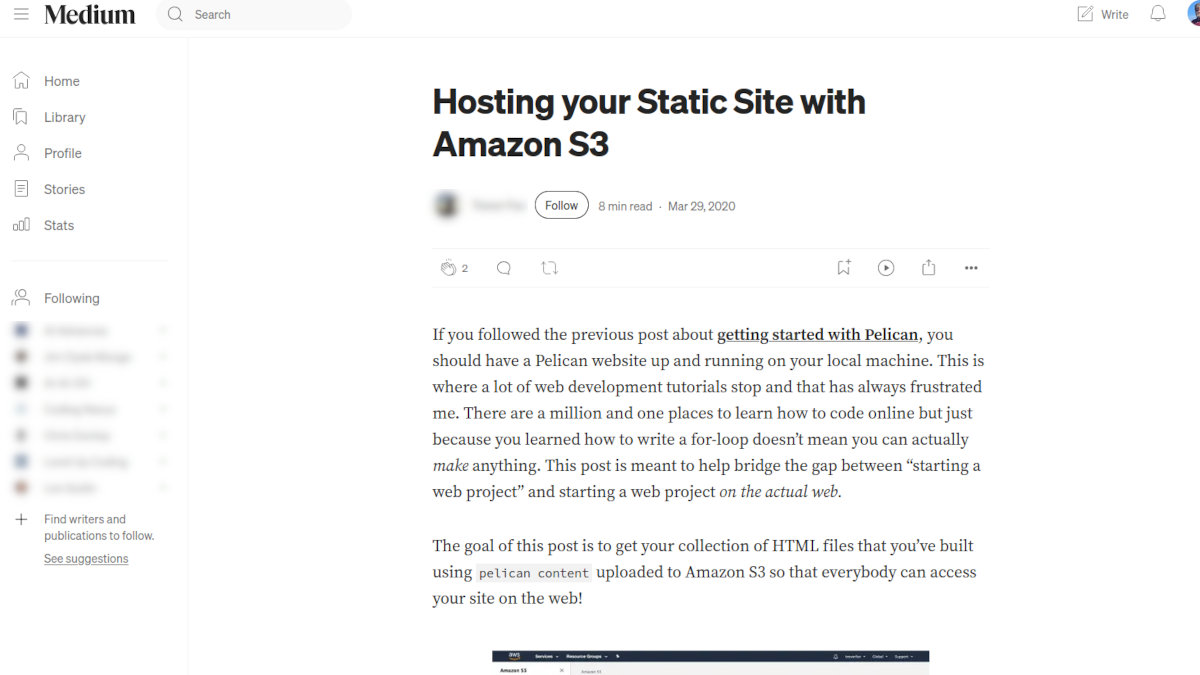
Operators upload AI-generated garbage to platforms search engines automatically trust. Google Docs. Google Drive. Amazon S3 buckets. Public file hosting on Cloudflare. The platforms host millions of legitimate files, so search engines extend the platform's authority to anything published on it.
The operator does not need a website. They do not need a domain. They do not need any infrastructure of their own. They just need a free public link on a major platform and a stack of AI-generated content to upload.
The garbage ranks because of where it lives, not because of what it says. The clean platform URL does the heavy lifting while the actual content is whatever spam the operator wants to push.
When the platform eventually cleans up the abuse, everything built on top of those laundered URLs disappears at once. Anyone who paid for the strategy loses every gain it produced. But the operator has already moved on to the next batch.
What These Three Have In Common
The mechanics are different. The defenses are different. But the philosophy is identical.
Earned authority is valuable enough to steal. The systems that decide what ranks and what gets cited are not yet good enough to distinguish real authority from manufactured authority. So a class of operators has emerged whose entire business model is exploiting that gap.
They are not trying to build anything. They are trying to extract value from what other people built.
Leeching extracts value from your own site. Hijacking extracts value from your name on their sites. Laundering extracts value from a trusted platform's reputation. Same goal, three angles of attack.
What You Can Actually Do
You cannot stop any of this from happening. There is no setting that prevents your name from being scraped, no plugin that protects you from every vulnerability, no policy that forces operators to stop running these schemes.
What you can do is detect it, document it, and clean up what falls under your control.
Search your business name in quotes regularly. Look at the second and third pages of results, not just the first. Note anything that does not belong to you and any unfamiliar relationships claimed about your business. That tells you what the Authority Hijackers are doing with your name.
Audit your own website regularly if you run WordPress, Drupal, or any other content management system. Look for pages you did not create, content in languages you do not publish in, and outbound links to sites you have never approved. That tells you whether Authority Leeching is happening on your domain.
Watch your backlink profile if you have access to a tool like Google Search Console or Ahrefs. Backlinks from random Google Docs, Drive folders, or S3 buckets are a signal that your name is being used in Authority Laundering schemes.
None of this is glamorous work. It is the digital equivalent of walking the property line and checking the fence. Most people never do it. The ones who do are the ones who notice when something has changed.
The Foundation Argument
A weak digital foundation makes every one of these attacks easier.
A site without proper security is easier to compromise for Authority Leeching. A business with a scattered or inconsistent digital identity is easier to misrepresent through Authority Hijacking. A business with no clear presence is easier to drown out through Authority Laundering.
A strong, consistent, controlled foundation does not stop the attacks. The attacks are happening regardless. But a strong foundation makes them less profitable for the attacker and easier to detect for the owner.
Define your identity clearly. Lock down your infrastructure. Monitor what is being published in your name. Document everything you find.
The internet will not clean itself up. The platforms will not clean it up. Search engines will not catch up to it any time soon.
If you want your authority to stay yours, you have to defend it.
Nobody else is going to.