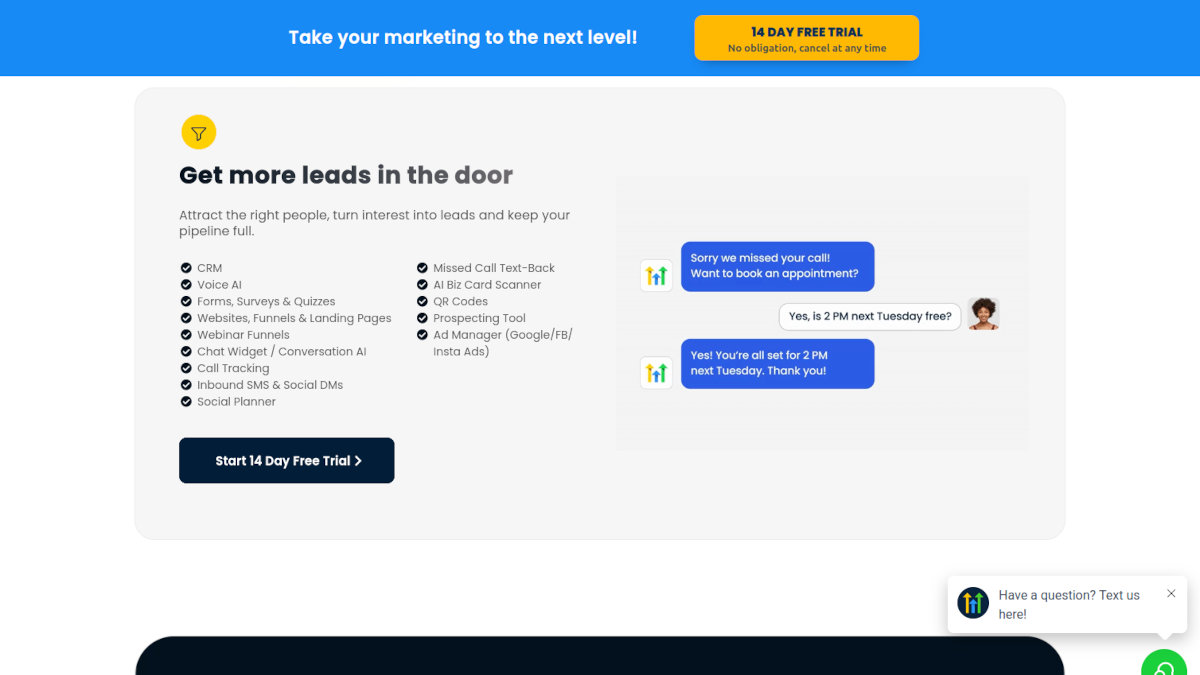
There is a category of software platform that has become very popular with marketing agencies over the last few years. You may have heard of GoHighLevel, commonly sold under white label names so you never actually know what you are buying. The pitch is compelling. One platform to handle your CRM, your email marketing, your social scheduling, your pipeline management, and yes, your website. Everything in one place. One invoice. One login.
Before you sign anything, there is a question you should ask.
What happens to my website if I leave.
What They Mean By "Website"
When a GoHighLevel agency tells you a website is included in the package, what they mean is that a template has been populated with your business name, your logo, and some stock copy describing what you do. It lives inside their platform. It runs on their infrastructure. GoHighLevel's own documentation confirms there is no supported export path for sites built inside the platform. What was built there stays there.
If you leave, you are not handed a codebase. You are handed nothing, because nothing was ever built to exist outside of their system.
What they have sold you is not an asset. It is a monthly fee to keep your own front door open.
The Question Every Agency Should Answer Before You Sign
When an agency sells you a website built on a platform like this, one of three things is true.
They know the site is not portable and they told you. That is a legitimate business arrangement. You understood what you were buying and made an informed decision. I have no argument with that.
They know the site is not portable and they did not tell you. That is an ethical failure. You are now paying monthly for continued access to something you were led to believe you owned, and the cost of leaving is rebuilding from scratch.
They do not know the site is not portable. That means they are selling a product they do not fully understand, which raises its own questions about whether you should be taking their advice about your digital presence at all.
Notice that the intent does not change the outcome. In scenarios two and three you end up in the same place. Dependent on a platform you cannot leave without losing the website you paid to have built.
If you are selling websites professionally, you have a responsibility to understand what your client owns, what they do not own, and what happens when they leave. If you do not know the answer, you should not be selling websites. If you do know the answer, your client deserves to hear it before they sign.
The Hostage Math
Website hosting is not expensive. A professionally managed hosting environment runs between five and twenty dollars a month depending on the resources required. My own hosting packages, even at the highest tier with everything included, do not exceed fifty dollars a month.
Agencies reselling GoHighLevel commonly bill their clients between one hundred fifty and five hundred dollars a month per account. A portion of that covers the CRM tools. A portion covers the agency margin. And a portion is what you pay every month to keep the website they built for you visible to the world.
The moment you stop paying, access ends. Not because hosting is expensive. Because the platform is designed so that your website cannot exist outside of it. You are not paying for hosting. You are paying for continued access to something that should have been yours from the day it was built.
The Shoehorn Mentality
Every business that signs onto a platform like this gets the same bones. The platform has a structure, templates, modules, sections, and a logic for how pages are built and how content is organized. Your business gets dropped into that structure and the expectation is that you will make it work.
A pest control company and a wedding photographer and a plumbing contractor all end up with the same architecture because the platform only knows one shape. The differences are cosmetic. Change the colors, swap the photos, rewrite the headline. The underlying structure is the same for everyone because it was designed for everyone, which means it was designed for no one in particular.
I have written before about WordPress and Elementor creating the same problem. The tool becomes the constraint. Instead of asking what this business needs and building something that answers that question, the agency asks what the platform can do and figures out how to make the business fit inside the answer. The result looks like a website. It functions like a compromise.
The White Label Problem
Most businesses buying into a GoHighLevel package do not know they are buying GoHighLevel. The platform is sold under the agency's brand name. The login screen has the agency's logo. The support email goes to the agency. The business owner has no idea what the underlying technology is, who actually hosts their data, or what happens to any of it if they decide to leave.
That opacity is not an oversight. It is a feature of the sales model. If the business owner knew they were locked into a white labeled platform they might ask harder questions. They might ask who owns the data. They might ask what migration looks like. They might ask why they are paying hundreds of dollars a month for a website that cannot be moved when real hosting costs a fraction of that.
The agency does not benefit from those questions getting asked.
Is It Happening To Me?
Ask your agency: "What happens to my website if I leave?" If the answer is anything other than "you get the code," you're in a rental agreement. You're in a Set and Forget situation and they not only forget about the site, they forget about their client.
What A Website Should Actually Be
A website built for your business should reflect how your business actually works. The structure should match your services, your customers, and the way people find you and decide to contact you. The code should be clean, the hosting should be stable, and the whole thing should belong to you when it is built.
It should not require a monthly subscription to stay online. It should not disappear when you change vendors. It should not look like the same template your competitor down the street is running because they hired the same agency and landed in the same platform.
Ownership is not a technical detail. It is the foundation everything else is built on.
If you do not own your website, you do not own your front door. And a business that does not own its front door is dependent on whoever holds the key deciding to keep showing up.
That is not a foundation.
That is a rental agreement with no lease.