I have watched business owners lose future customers in real time without ever knowing it happened.
Not because they got a bad review. Because of what they did next.
A bad review is not an attack. It is not a challenge. It is not an invitation to defend your honor in public. It is a data point left by a human being who had an experience worth documenting, and more importantly it is an opportunity that most business owners either ignore completely or detonate on contact.
The customer who left the review is probably not coming back regardless of what you write. That relationship may already be over. The response you write is not for them.
It is for everyone who reads it next.
Who Is Actually Reading Your Reviews
Every person who finds your business online before they decide whether to call is reading your reviews. Not just the stars. The actual text. And when there is a response from the owner they read that too, sometimes first.
What they are looking for is not perfection. Nobody expects a business to have zero complaints. What they are looking for is how you handle it when something goes wrong. That tells them more about your business than the complaint itself ever could.
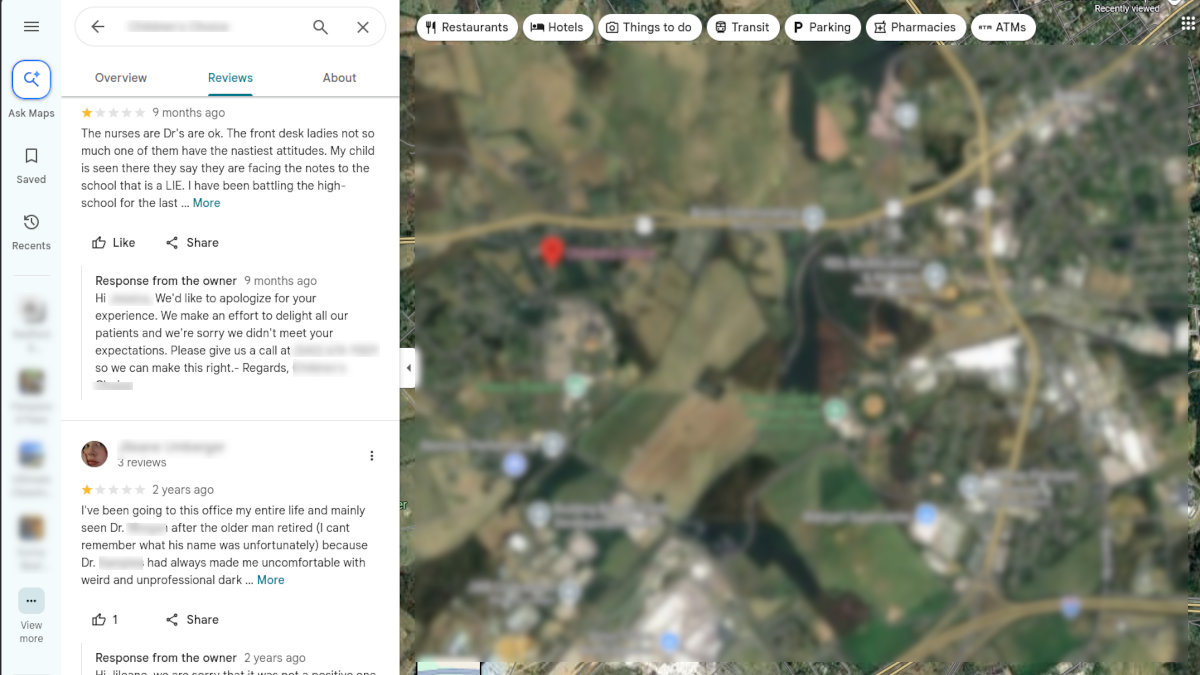
A one-star review with a composed, professional, genuinely personal response from the owner signals that this is a business that takes its customers seriously and handles problems like adults. A one-star review with a combative response, or no response at all, signals something else entirely.
The audience for your review responses is not the unhappy customer. It is every future customer reading the thread before they make a decision. That re-framing changes everything about how you should be writing them.
The Combative Response
You have seen this.
Everybody has seen this.
A customer leaves a negative review. The owner responds by disputing every detail, questioning the customer's memory, explaining at length why the customer was actually wrong, or in the worst cases getting openly hostile. Sometimes the owner is right. Sometimes the customer genuinely misrepresented what happened.
It does not matter.
The person reading that exchange three weeks later does not know who is telling the truth. What they know is that the owner got into an argument in public. That is the only thing the response communicated. Whatever the merits of the original complaint, the combative response transformed a customer service problem into a character demonstration.
That demonstration is permanent and indexed and sitting there for every future customer to read.
The Ignored Review
The combative response is visible damage. The ignored review is invisible damage and it is far more common.
Most businesses do not respond to reviews at all. Positive ones sit there with no acknowledgment. Negative ones accumulate without a word from the owner. The review section looks like a place where customers talk and nobody at the business is listening.
That silence communicates something. It tells future customers that the business does not pay attention, does not engage, and probably will not be responsive if something goes wrong. It is not neutral. Silence in a public forum always reads as indifference.
The Canned Response
Some businesses respond to reviews but use the same template every time. Thank you for your feedback. We appreciate your business. We hope to see you again soon.
Anyone who reads more than two of them immediately recognizes the pattern. The response was not written for the reviewer. It was copied and pasted by someone who wanted to check a box. It signals automation and indifference at the same time and it is almost worse than saying nothing because it demonstrates that the business noticed the review and chose not to actually engage with it.
What A Good Response Actually Does
A good review response does several things at once.
It speaks directly to the individual who left it. It references something specific from their review so they know it was actually read. It thanks them genuinely if the review was positive or acknowledges the issue honestly if it was not. It is written by a human being for a human being and it reads that way.
It also does something most business owners do not realize.
Google indexes review responses, and I do not believe they treat them the same way they treat marketing copy on your own website. A review response lives on Google’s platform, attached directly to a verified business entity, a real customer interaction, and a real service experience. Your website is you talking about yourself. A review thread is Google watching other people talk about you while you respond in public. That is a very different quality of signal.
That is a different quality of signal entirely. Mentioning your business name, your location, and the specific service in your response is not just good practice. It is fresh business context delivered directly inside Google's ecosystem where it carries the most weight.
That means a business that responds personally and specifically to every review is building something over time. Not just goodwill with individual customers but a body of indexed content that signals to Google what the business is, where it is, and what it does, delivered in a place Google already trusts.
The Simple Standard
Respond to every review. Positive ones and negative ones both.
Write each response as if you are speaking to that specific person, because you are. Use their name if they provided one. Reference the specific service or visit they mentioned. Keep it human.
For negative reviews, stay composed regardless of whether you think the complaint is fair. Acknowledge the experience, offer to make it right if that is appropriate, and keep it brief. You are not writing for the reviewer at that point. You are writing for everyone who reads it later.
Never use the same response twice. Never respond in anger. Never argue in public.
Your review section is a conversation that is always running, always visible, and always being read by people who have not decided yet whether to trust you. The question is whether you are showing up to that conversation or leaving it to chance.
Most businesses leave it to chance.
That is an opportunity for the ones that do not.
---
Sources
Google Business Profile Help - Tips to improve your local ranking on Google - Archived
Google Business Profile Help - Mange customer reviews - Archived
Google Business Profile Help - Tips to get more reviews - Archived